
Custom Washable Kraft Paper Bags: Sewn Bag Buyer’s Guide
Quick answer: for a custom washable kraft paper bag, start with what the finished bag must carry. Then choose the bag shape, finished dimensions, material grade, seam and handle construction, and logo method. Ask for a sample that demonstrates the intended load and care instructions before approving bulk production.
Senrong makes sewn washable kraft paper bags such as totes, backpacks, messenger bags and pouches. These are constructed more like fabric bags than folded retail paper carriers. This guide focuses on the sewn product styles we can develop.
Fast Picks: Which Bag Style Fits Your Project?
| Project | Starting style | Check during sampling |
|---|---|---|
| Retail merchandise or reusable shopper | Open-top tote or shopper with shoulder handles | Capacity, handle comfort, base support and expected load. |
| Branded daily carry | Backpack, messenger or crossbody bag | Strap anchors, closure, pockets and repeated-use performance. |
| Gift set or travel accessory | Cosmetic pouch or zipper organiser | Zipper opening, lining, logo size and interior capacity. |
| Coordinated product range | Tote plus matching pouch or crossbody bag | Material colour consistency, trim matching and packaging. |
1. Specify the Size Around What Goes Inside
A bag’s outside dimensions do not tell the full story. Start with the largest item or typical group of items the customer will carry. Measure the needed width, height and depth, then check the usable opening, pocket space and closure clearance. A gusset increases depth, while a lining or internal divider can reduce usable space.
For a tote, confirm whether it should fit folded apparel, a notebook or a boxed product. For a backpack, check the intended load and whether a padded compartment is required. For a cosmetic pouch, test real bottles or travel items against the zipper opening and base shape. Give the factory physical samples or a dimensioned packing list when possible.
2. Choose the Sewn Structure
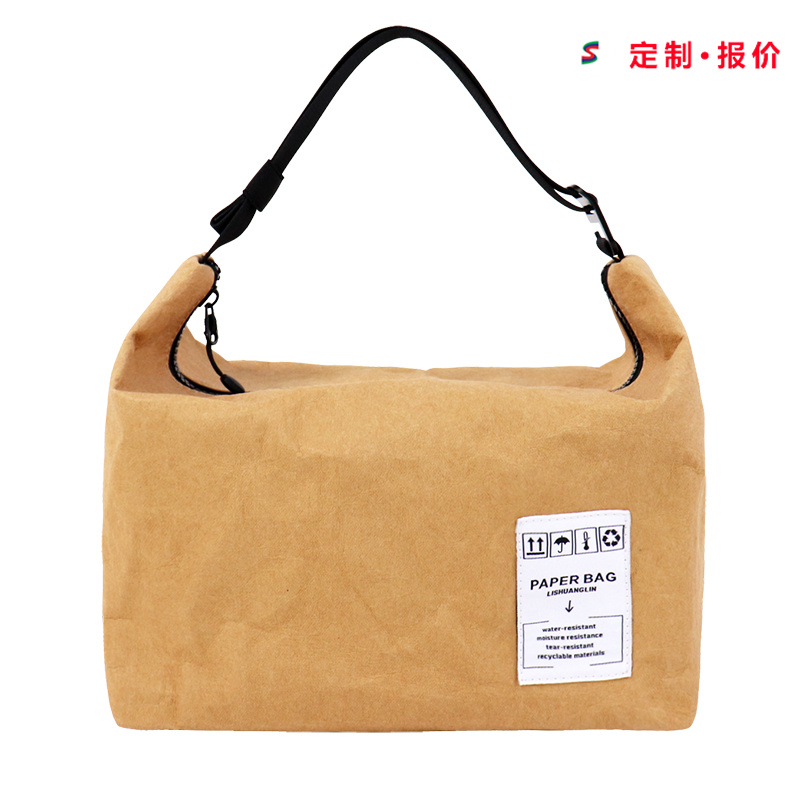
Washable kraft paper tote bags can have a flat body, boxed base, front pocket or longer shoulder handles. A flat style packs efficiently; a wider base makes loading easier. See Senrong’s grocery tote with shoulder strap and tote with front flap pocket for two different layouts.
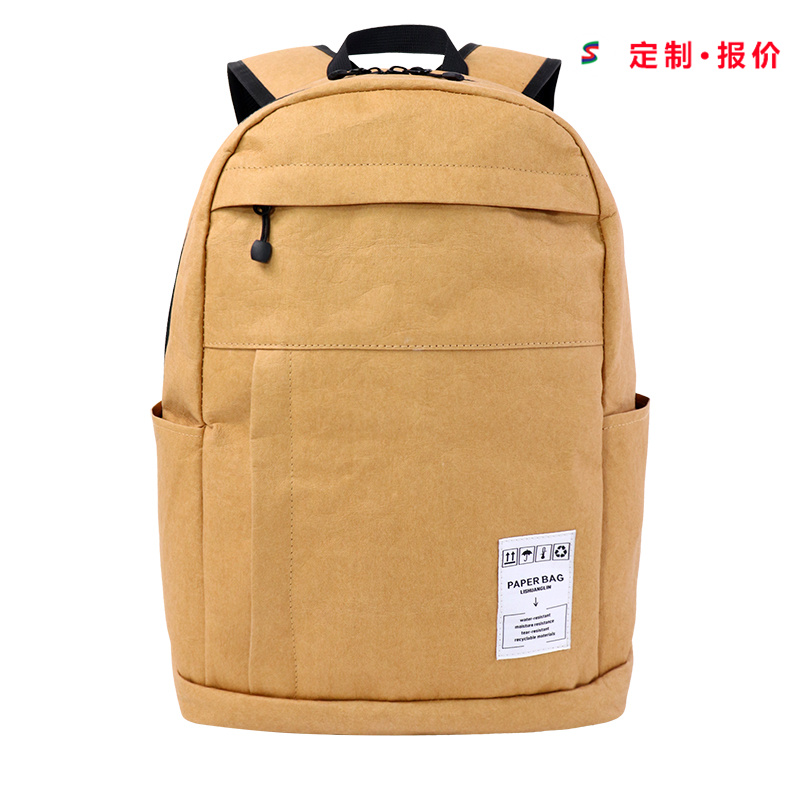
For hands-free carrying, the washable kraft paper backpack provides a design reference. A messenger bag with buckle pockets or compact crossbody bag may suit a narrower product brief. Strap attachment, closure and pocket layout should match the intended use.
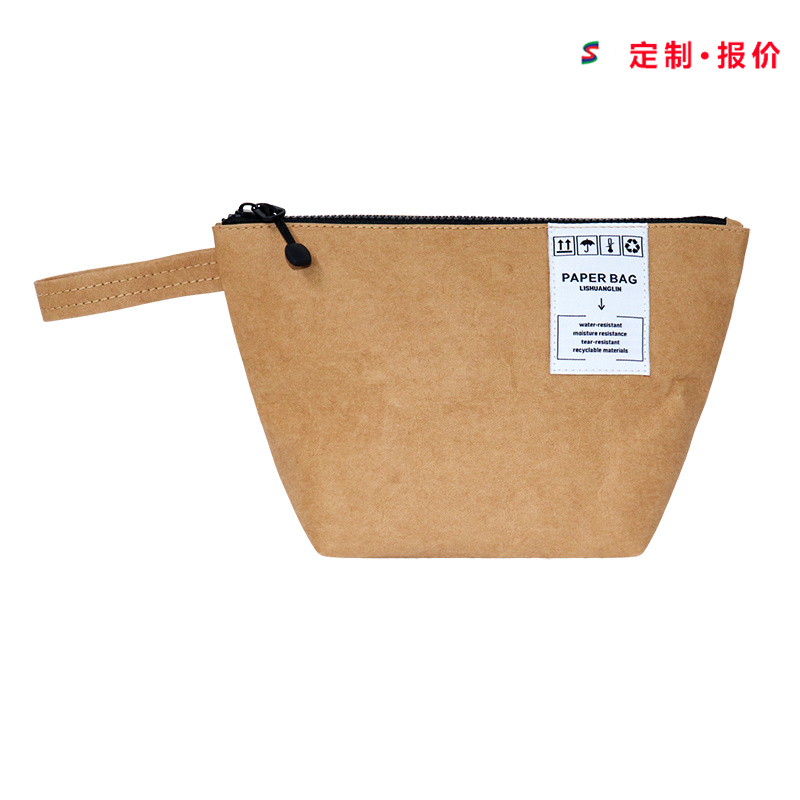
For smaller accessories, compare the cosmetic pouch with wrist strap and slim zipper pouch. Their different openings and carrying details matter more than a generic “small” size label.
3. Select the Material and Confirm Care
“Washable kraft paper” describes a family of paper-look materials, not one fixed formula. The selected sheet may contain cellulose fibres with binders or other components. Its thickness, surface treatment and colour affect sewing, creasing, print appearance and care. Request a sample and material specification for the actual grade.
For the complete bag, ask how the chosen material, lining, logo and hardware should be cleaned. The word “washable” alone does not establish machine-wash performance, waterproofing or a particular number of wash cycles. Confirm the care label from the approved sample and supporting test information if cleaning claims matter to the buyer.
4. Check Seams, Handles and Load-Bearing Areas
A stitched construction needs attention at the points that carry weight. Specify the handle or shoulder-strap material, width and attachment method. On backpacks and messenger bags, review stress points where straps join the body. On totes, review the upper edge and base. On pouches, check zipper ends and corner seams.
The material can retain visible needle holes, so changing a seam after sewing may leave marks. Confirm the sample’s seam position, stitch appearance and reinforcement before bulk cutting. Request a practical load or handle test when the project has a defined carrying requirement.
5. Match the Logo Method to the Material
For a bold logo, ask for a print sample on the chosen material colour. A brown or textured surface can change how pale colours, fine lines and gradients appear. Keep essential artwork away from seams, gussets, strap anchors and heavily creased areas. Allow a clear print area in the technical drawing.
Depending on the design, branding may use printing, a sewn label, patch or another approved method. The exact result should be agreed on a pre-production sample. If colour matching is critical, provide artwork files and a colour reference rather than relying on a screen image.
6. Plan Quantity, Samples and Documents
Ask for a quotation based on your actual style, material, dimensions, trim, logo and packaging. Minimum order quantity and lead time can change when a project adds a custom material colour, special hardware or several sizes. For a range, list the quantity of each style and colour separately so the factory can evaluate the material and production plan accurately.
Allow time for a first sample, any corrections and a final approved sample before bulk production. If the product will be sold in Europe or another regulated market, tell the factory which material, chemical, packaging and labelling documents your importer requires. Senrong can discuss available project-specific documentation and customer factory-audit arrangements. Confirm the scope and validity of each report or certificate before using environmental claims.
Common Mistakes That Delay a Sewn Bag Order
- Ordering from an outside size alone: the usable opening and gusset may not fit the intended contents.
- Ignoring strap stress: the right handle attachment depends on the bag’s expected load.
- Placing a logo across a seam or crease: create a defined print area on the approved pattern.
- Assuming all washable paper behaves alike: confirm the selected grade and care instructions.
- Changing the seam layout after sampling: needle marks may remain visible on the material.
- Using certification claims without checking scope: material documents and factory audits answer different questions.
Frequently Asked Questions
Can Senrong make glued, coated-paper retail carriers?
Our washable kraft paper range focuses on sewn bags and accessories. A folded, glued carrier made from coated printing paper uses a different production process. Send us a reference image if you are unsure which construction your project requires.
Can a sewn washable kraft paper bag have a zipper and lining?
Yes, depending on the chosen design. Senrong’s existing pouch and messenger examples show several closure and pocket directions. Confirm the zipper, lining and internal layout during sampling.
What is the best size for a custom washable kraft paper tote?
There is no single best size. Measure the items the tote must carry, including any product box, and define the required width, height, depth and handle drop. The sample should demonstrate the intended fit and carrying comfort.
Can the finished bag be machine washed?
Do not infer machine-wash performance from the material name. The material, logo, lining, straps and hardware all affect the care method. Agree the instruction for the complete approved bag.
What should I send for a quotation?
Send a reference design, intended use, dimensions, estimated quantity by style and colour, logo artwork, destination market, target date and any required tests or audits. State the expected contents or carrying load where relevant.
Start a Custom Sewn Washable Kraft Paper Bag Project
Senrong supports OEM/ODM bag development, sampling, production and quality checks. Explore our custom bag manufacturing service and send your brief for a quotation. We can use an existing tote, backpack or pouch as the starting point for your own dimensions, branding and trims.