
How We Prepared an Insulated Lunch Bag Order for Sam’s Club
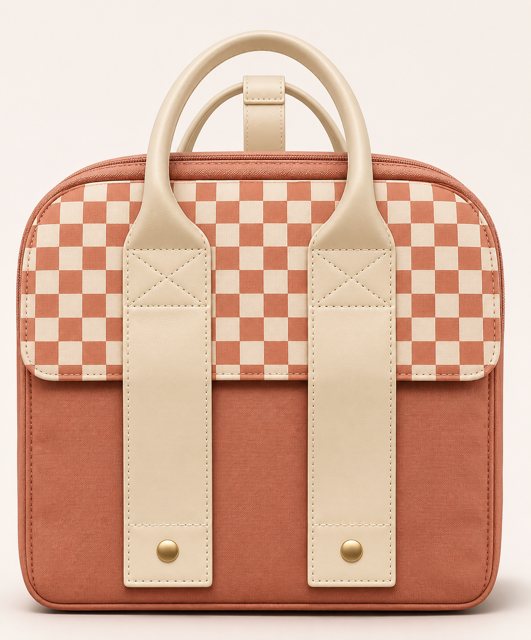
An insulated lunch bag for a warehouse retailer has to work as a product and as a retail-ready shipment. In one Sam’s Club domestic procurement project, our team had to coordinate product testing, display packaging and palletized transport. This case records the requirements and decisions documented during that order. It is an account of one project, not a universal specification for every Sam’s Club supplier.
Senrong develops custom cooler bags and insulated lunch bags for retail and private-label programs. For this project, the bag was intended for domestic procurement rather than a direct-import order.
First, identify the order route
The original project brief distinguishes three order routes. In a domestic procurement order, the supplier sells into the retailer’s local purchasing and distribution system. In a direct-import order, a global sourcing team places the order with an overseas factory for shipment to the destination market; the destination country’s requirements have to be checked. Online orders may add their own protective packaging and logistics-label requirements. Our insulated lunch bag example followed the domestic route.
Product testing: start with the retailer’s designated laboratory
The first practical step was to ask the customer or its designated laboratory which test items applied to this specific bag. Before a pre-production sample was ready, the team could arrange preliminary California Proposition 65 screening on materials. The project then called for testing at the pre-production sample stage and again on a bulk-production sample.
The documented test plan covered the following points:
| Check | What the team reviewed |
|---|---|
| Potential food-contact components | Metal analysis under the project’s RS128A/FDA Act checklist for components that might contact food, including zipper pulls, zippers, foil lining, binding and sewing thread where applicable. |
| Metal corrosion | WM0099 assessment after 24 hours of exposure to a 1% salt-spray solution. |
| Thermal performance | Insulation performance of the finished lunch bag. |
| Colorfastness to rubbing | The project recorded grade 4.5 for both wet and dry rubbing. Its stated acceptance levels were at least grade 3.0 wet and grade 4.0 dry. |
| Stability and use | Stability during normal use, plus function and ease of use. |
| Appearance | Cleanliness of the filling material and visible product defects. |
| Temperature exposure | Four hours at 140°F (60°C) and four hours at 0°F (about −18°C), according to the order’s test plan. |
| Care label and cleaning | The label specified “wipe clean only”; the team checked for changes after wiping. |
| Packaging and barcode | Verification that the UPC barcode could be read correctly. |
The materials in this order were identified as a polyester exterior, polyethylene (PE) foam insulation and an aluminum-foil lining. The laboratory review also covered lead, cadmium, mercury and chromium under the packaging toxics checklist, and a BPA result below 0.1 mg/kg by LC-MS/MS. The specified laboratory could not complete the food-contact assessment for the non-stainless-steel metal zipper pull and ring, so those components needed separate testing. These are project-specific checks and results; they should not be read as a blanket certification for other bags.
For TSCA-related substances, PFAS, HFCs and flame-retardant chemicals, the brief says the designated laboratory did not perform the relevant checks. The supplier therefore had to arrange appropriate independent testing and provide the required declarations to the end customer. The team also learned to send a complete set of production samples and trims from Vietnam at once, reducing delays caused by missing components.
Retail display packaging was part of the product plan
The bags needed a display format that met the buyer’s dimensional requirements and showed the color assortment clearly in a warehouse-club setting. The team worked with a retail-packaging specialist that could develop the display structure, color arrangement and pallet layout. Before mass production of the packaging, a prototype could be checked internally. The finished palletized pack then needed the specified ISTA packaging test at the designated laboratory; the brief states that shipment depended on passing that test.
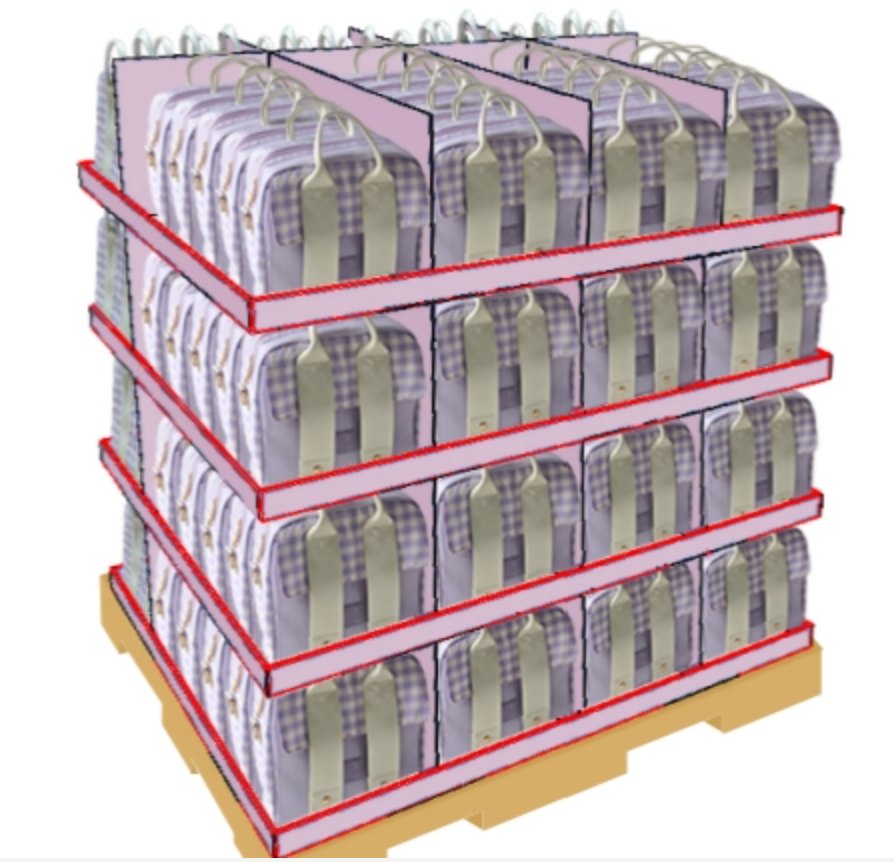
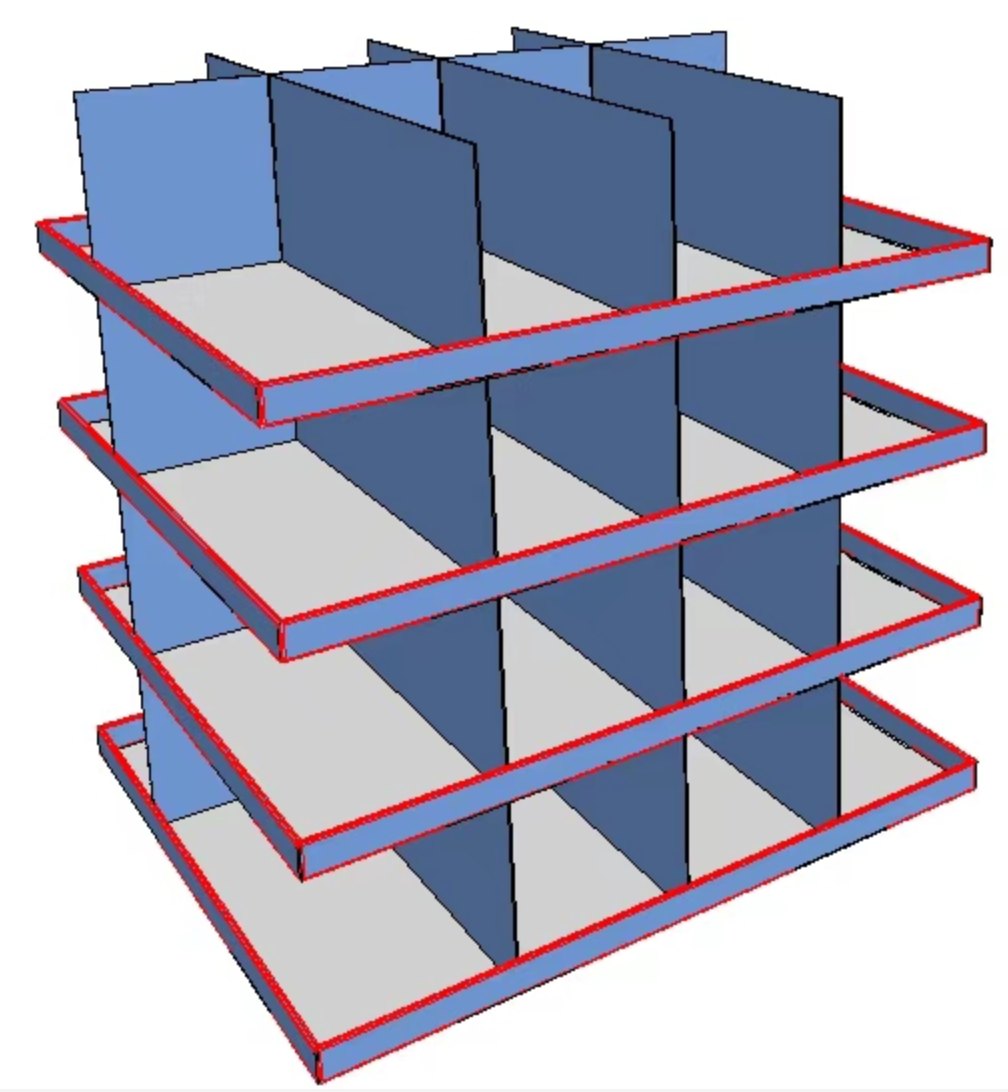
Color allocation mattered at the pallet level. The project plan distributed the colorways across the layers in an agreed ratio, rather than placing one color in a single section. That detail later shaped the container-loading plan.
Pallet testing and the shipping decision
The order’s pallet guidance specified the pallet type and wood-packaging treatment applicable to this route. The team checked the required pallet specification and planned an ISTA test for the loaded display package. This part of the work involved more than protecting the bags: the display trays, cartons and pallet had to function as one shipping unit.
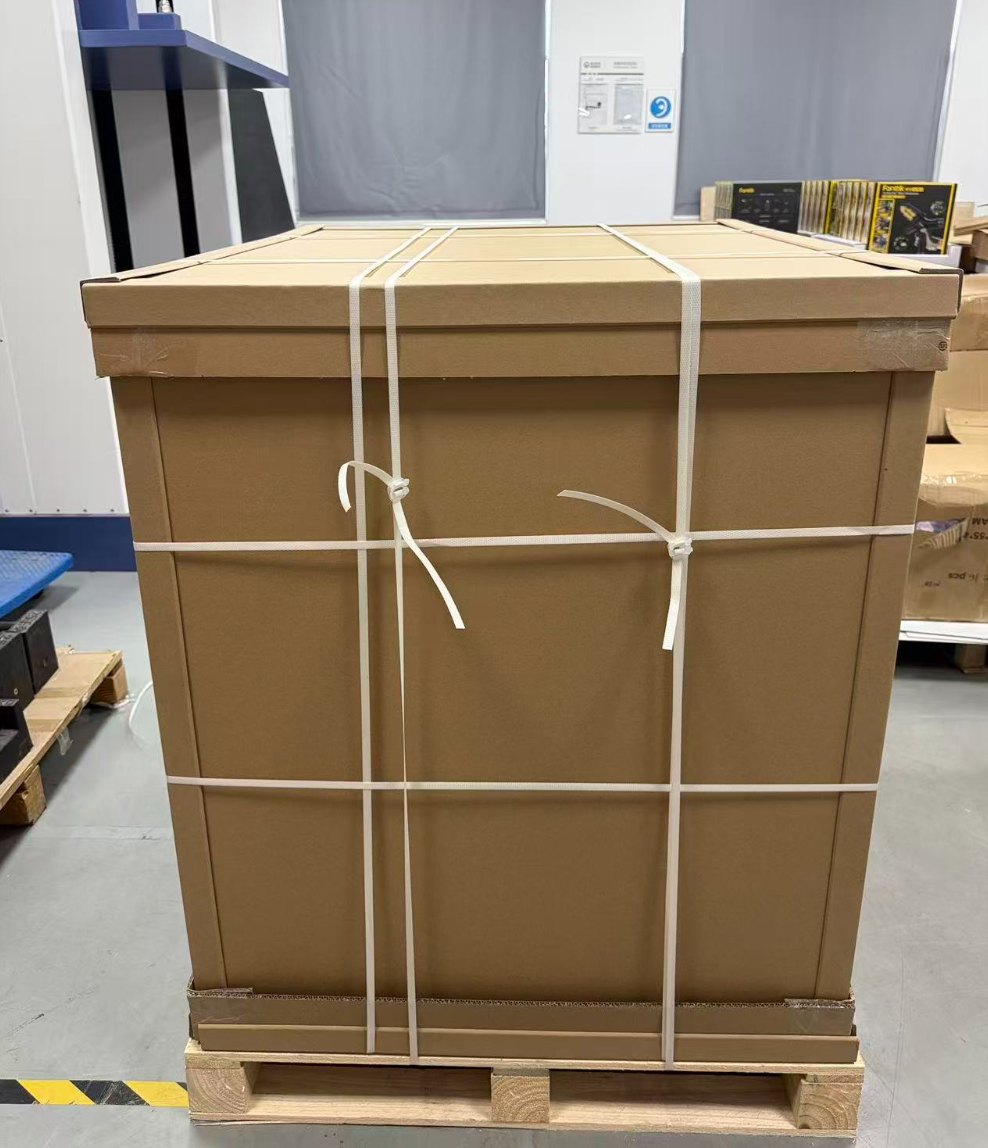
The original loading comparison showed a major space trade-off. Shipping fully assembled, palletized displays would have required about 30 containers for this order, while flat-packed cartons required about eight containers. Those figures were estimates for this particular project, not a general freight rule. The selected solution was to export the bags in flat cartons and ship the display materials separately. At the destination, the brand-side team would assemble the displays and palletize them before delivery to stores. Even with that shipping method, the planned palletized display still had to pass its required test.
Each container had to carry the right mix of bag colors relative to the planned pallet assortment. That way, the destination team could assemble displays from arriving goods without waiting for every container in the order.
What this case means for a custom cooler bag buyer
For a retail custom insulated lunch bag, confirm the test protocol with the buyer and laboratory before finalizing the bill of materials. Approve the finished-bag construction, care label and barcode alongside the retail display. Then compare freight volume for fully assembled and flat-packed packaging, while keeping the final display’s test requirements in view. Senrong’s bag testing laboratory overview explains the role of in-house checks; customer-required third-party tests must still be arranged for the exact product and market.
If you are developing a custom cooler bag for retail, review our cooler bag range or contact Senrong with your design, destination market, packaging concept and test specification. Our Vietnam manufacturing page provides more information about our OEM production setup.
Case note: This article summarizes one order brief. Testing, packaging and pallet requirements vary by buyer, product and destination. Mention of Sam’s Club identifies the order context and does not imply retailer endorsement.